Zendesk vs. Ada
See why Zendesk is the more complete AI support software, with automation, ticketing, QA, and reporting for unmatched control. Start your free trial.
Laatst gewijzigd September 10, 2025
Zendesk vs. Ada: Which is better?
Imagine hiring a team member who can answer customer questions, resolve issues, and work overtime without a drop in quality. Now imagine that same employee can’t talk to the rest of your team and forgets everything between conversations. That’s the difference between a standalone AI chatbot and a fully integrated AI support solution—and it’s a glimpse of what’s at stake when comparing Zendesk vs. Ada.
Both Zendesk and Ada offer AI-powered customer support, but they take fundamentally different approaches. Ada is a chatbot-first platform that focuses on automating simple customer interactions. Zendesk, on the other hand, offers a complete customer experience suite with advanced AI agents, ticketing, analytics, and agent assist tools built into one system.
In this guide, we analyze each software’s performance and highlight how Zendesk offers a more complete foundation for long-term support success.
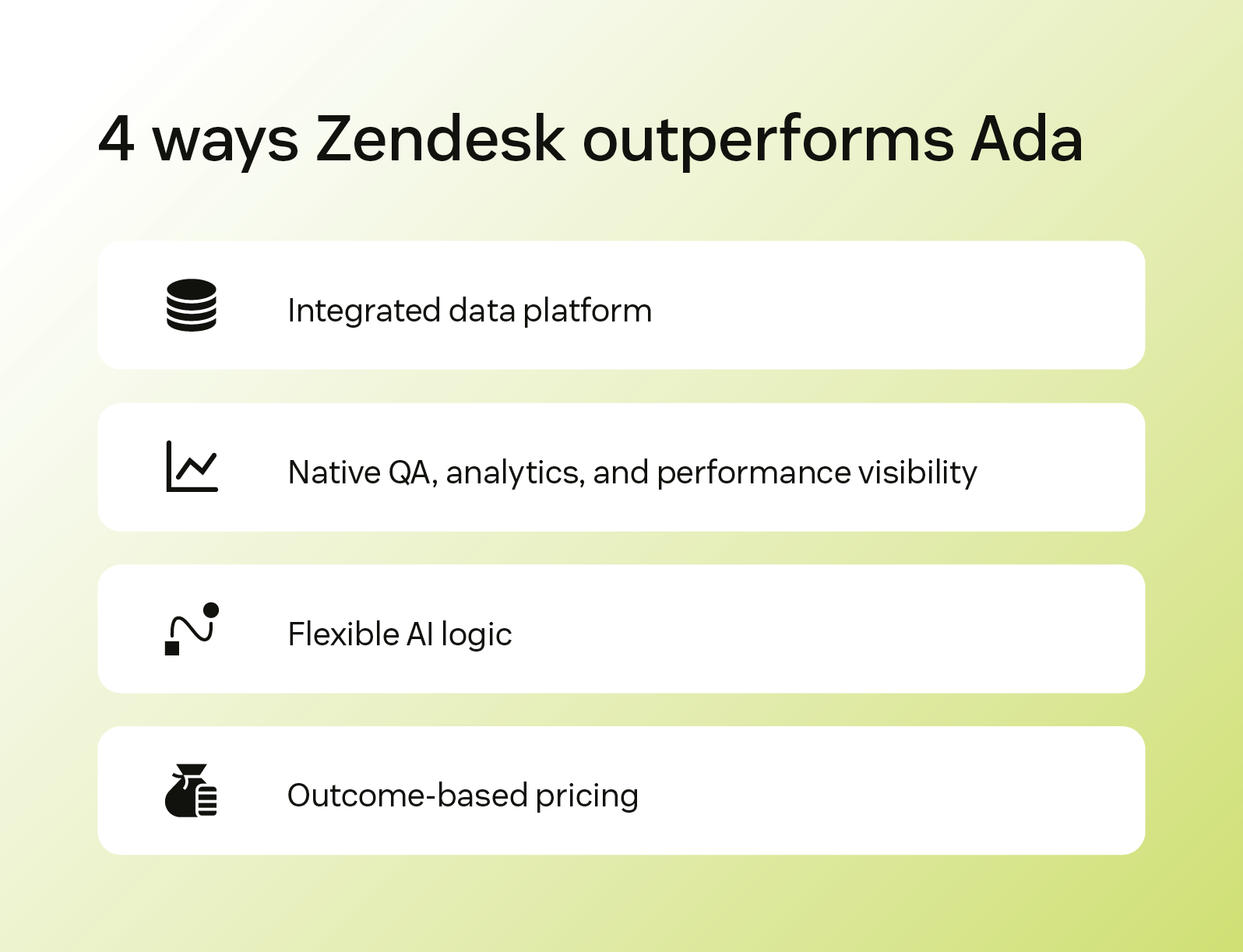
Integrated data platform
Zendesk offers a unified platform where AI tools, agents, and data work together seamlessly. Whether a customer interacts with an AI agent or a human one, the handoff is seamless, with full context carried across every step of the journey.
In contrast, Ada functions as a standalone chatbot without native support for ticketing, agent workflows, or built-in reporting. It also lacks integrated QA capabilities, making it harder for teams to deliver a cohesive, continuous support experience.
Native QA, analytics, and performance visibility
With Zendesk, you get out-of-the-box quality assurance (QA) tools and real-time reporting and analytics that span both AI and human support channels. Teams can track CSAT, monitor escalation trends, identify intent gaps, and fine-tune performance using one consistent system. That visibility makes it easy to understand how AI performs, where it adds value, and where it needs refinement.
Ada, by contrast, relies on manual oversight for QA. Its analytics are fragmented across dashboards, often presenting conflicting metrics that make it difficult to trust the data. Without intent-level insights, escalation tracking, or connected CSAT reporting, teams have limited visibility into how automation is performing or where to improve it.
Flexible AI logic
Zendesk AI is built for dynamic, real-world support workflows, not just static decision trees. With low-code tools, you can blend AI and human interactions, define flexible fallback conditions, and adapt automation paths based on evolving intent or sentiment.
Ada’s logic, while customizable, is confined to a limited front-end automation model that can struggle to support more complex or nuanced service scenarios.
Outcome-based pricing
Zendesk pricing is resolution-based, ensuring you pay for value delivered, not just usage. This model incentivizes efficient automation and measurable ROI, making it easier to scale AI responsibly.
Conversely, Ada typically charges per chatbot interaction or seat, which can lead to ballooning costs with limited correlation to actual business impact.
More in this guide:
- At-a-glance comparison: Zendesk vs. Ada
- Zendesk vs. Ada: Features comparison
- Pricing plans: Zendesk vs. Ada
- Customer stories
- Frequently asked questions
- Try Zendesk today
At-a-glance comparison: Zendesk vs. Ada
Zendesk and Ada both offer AI-powered support, but the depth and breadth of their capabilities differ significantly. The table below highlights how each stacks up across key features.
|
Critical capabilities |
Zendesk |
Ada |
|
Robust reporting & analytics |
✔ Unified analytics built into the platform, spanning AI, QA, and ticketing |
✘ No built-in reporting; depends on third-party tools and adds complexity |
|
Compliance & security features |
✔ Comprehensive compliance and regional data hosting across all channels |
✘ Limited data residency options and unclear HIPAA support |
|
Ticket management system |
✔ Native, end-to-end ticketing built into the platform |
✘ |
|
Flexible knowledge base integration |
✔ Connects to Zendesk or external sources |
✘ |
|
Quality assurance |
✔ Built-in tools to review, rate, and improve performance |
✘ |
Zendesk vs. Ada: Features comparison
Now let’s take a closer look at how each software handles these features, and where Zendesk pulls ahead.
Robust reporting & analytics
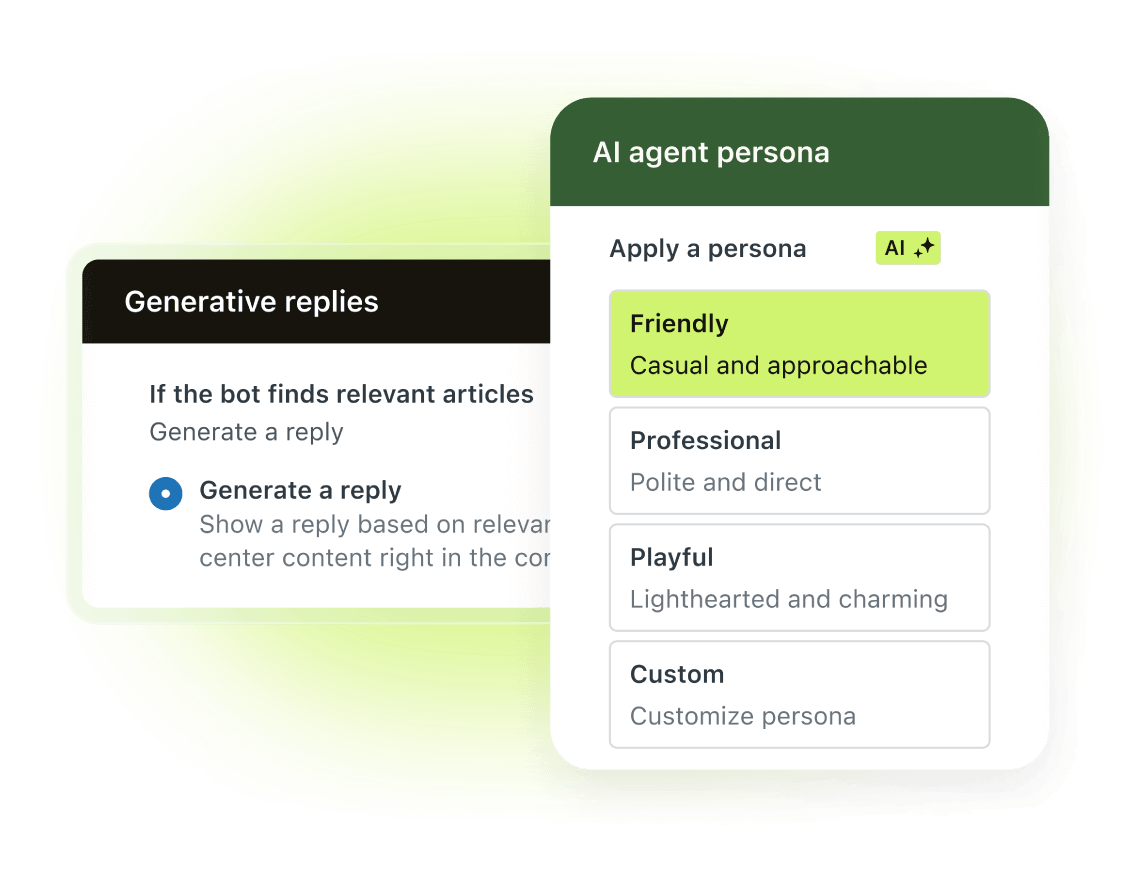
Explore Zendesk AI agents in action. |
Zendesk offers unified analytics across the entire support experience — from AI interactions to ticket resolution and quality assurance. Reporting is built into the platform and fully integrated with the agent workspace, giving teams clear visibility into performance and customer outcomes. AI agents continuously improve with real-time insights, and teams can make changes without relying on vendor support. Ada lacks native reporting and analytics. As a standalone bot, it depends on third-party tools like SunCo for escalations, creating fragmented workflows and adding cost and complexity. |
Compliance & security features
|
Zendesk is fully compliant with SOC 2, ISO 27001, HIPAA, GDPR, and CCPA—with coverage across all support channels, including email. It also offers regional data hosting and full data locality options to meet the needs of regulated industries and privacy-conscious teams. Ada is SOC 2 Type II, ISO 27001, GDPR, and CCPA compliant, but does not provide public documentation for HIPAA support or a signed BAA. Data is processed exclusively in the U.S., with no published options for data residency. This presents a challenge for teams with strict compliance or localization requirements. | 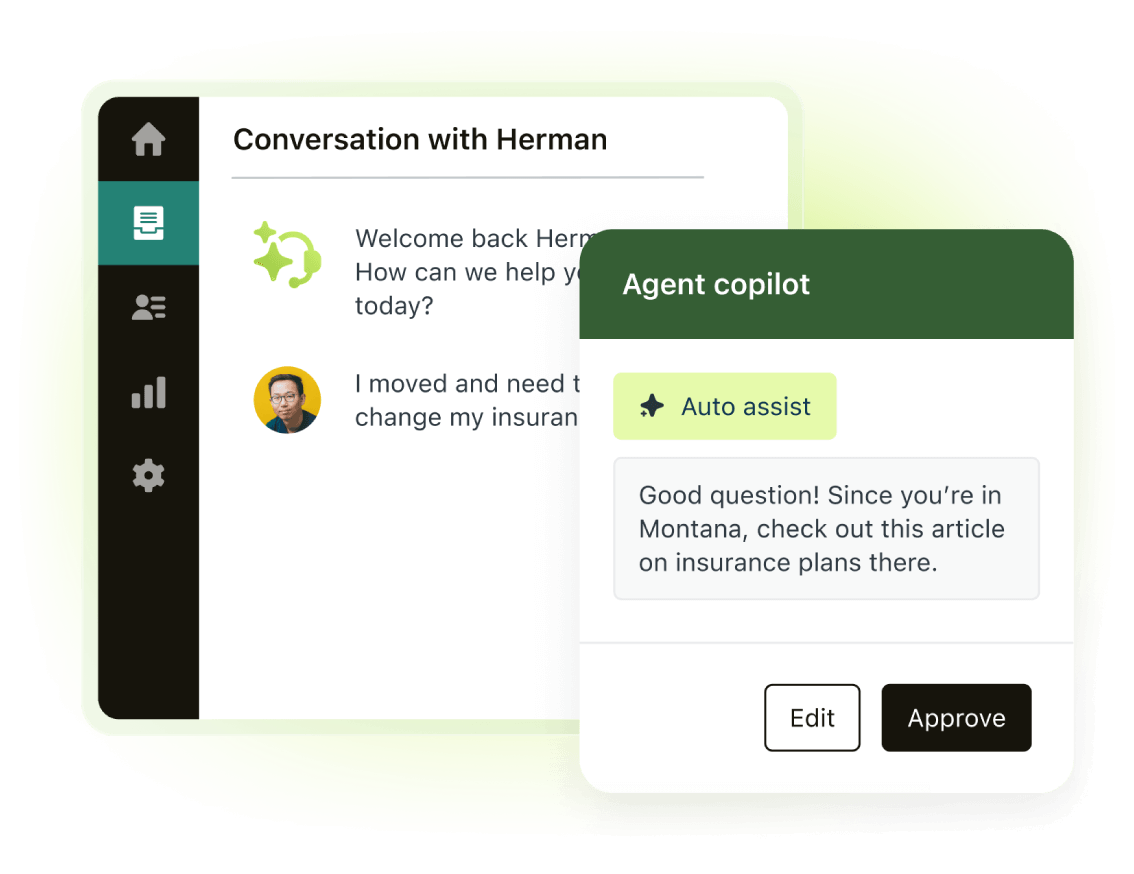
Learn how Zendesk helps you deliver secure, compliant CX at scale. |
Ticket management system
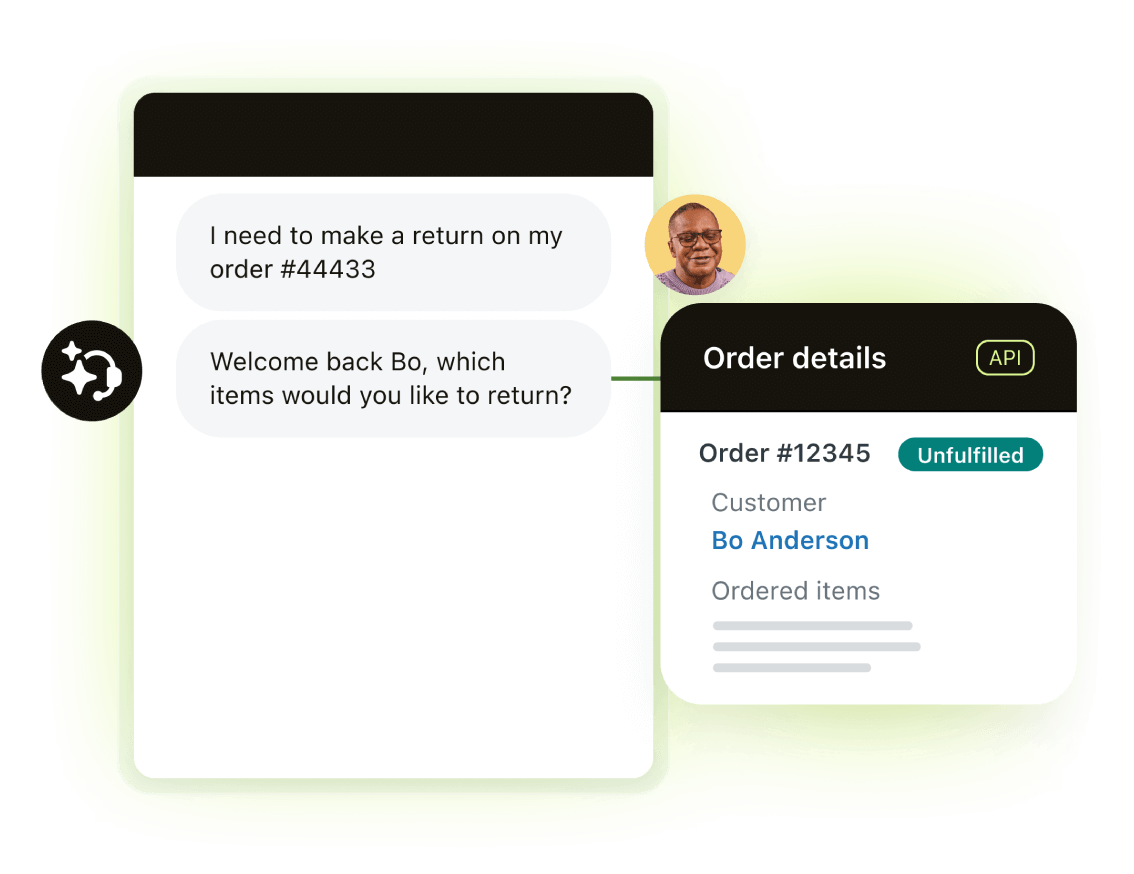
See how Zendesk AIpowers smarter ticket resolution. |
Zendesk includes a built-in AI-powered ticketing system integrated with agent workflows and customer history. This means AI and human agents can create, update, and resolve tickets directly, ensuring continuity across every touchpoint. Ada does not offer native ticketing and must be connected to an external system to manage support requests. |
Flexible knowledge base integration
|
Zendesk AI connects directly to its native knowledge base and can pull from external sources, allowing teams to deliver accurate, up-to-date answers at scale. Content is automatically indexed and surfaced based on relevance, reducing manual upkeep. Ada’s content is limited to pre-defined responses within its own system, making it harder to scale or update knowledge dynamically. |
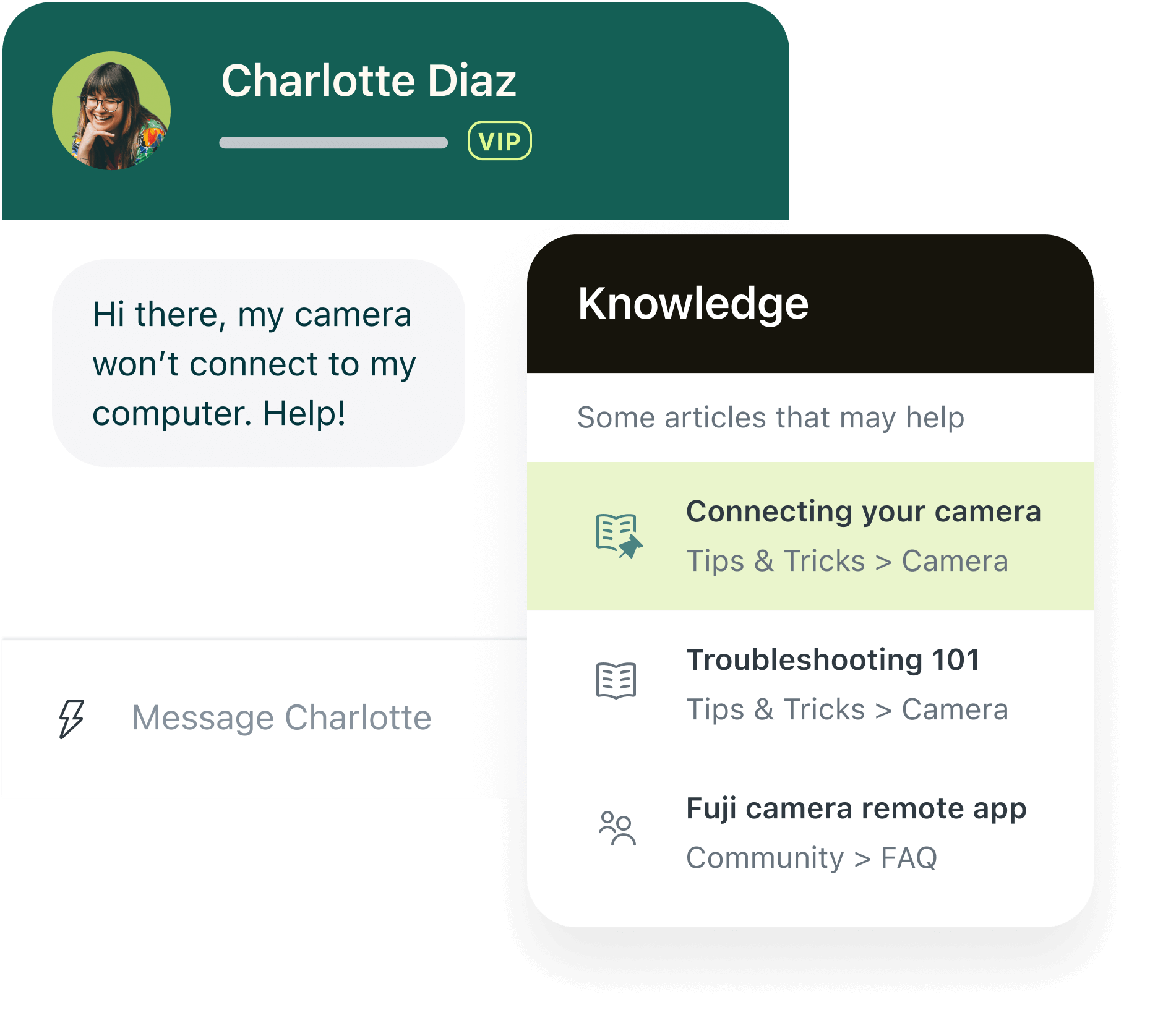
Discover the capabilities of Zendesk help center. |
Quality assurance
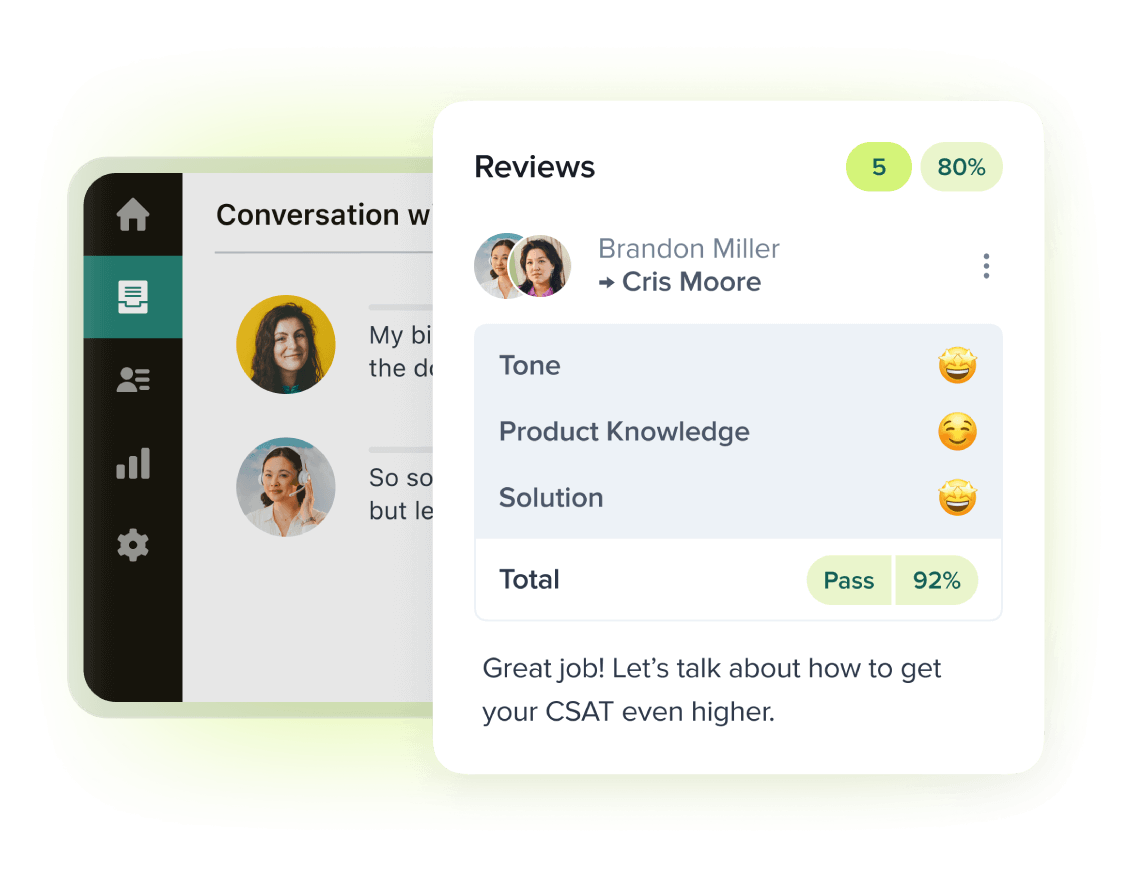
Automatically analyze every conversation with Zendesk QA. |
Zendesk includes built-in quality assurance (QA) tools that let teams review interactions, track performance over time, and continuously optimize support quality. Its conversational intelligence software helps surface trends and improve responses with up-to-the-moment insights. Ada does not provide native QA features, requiring manual review or third-party tools to evaluate performance. |
Pricing plans: Zendesk vs. Ada
|
Zendesk |
Ada |
|
Contact Ada for pricing. |
|
*Plans are billed annually. |
Zendesk offers transparent, scalable pricing with AI included in several plans, so businesses can predict costs and align spend with outcomes. Because Zendesk combines ticketing, AI agents, QA, and analytics in one platform, you avoid the added costs and complexity of managing multiple point solutions. That all-in-one approach makes it easier to control the total cost of ownership while scaling support.
Meanwhile, Ada uses interaction-based pricing and requires a custom quote to get started, making it harder to forecast costs or understand how pricing aligns with value. Since Ada charges you per conversation or message, costs can increase quickly as volume grows—without necessarily delivering better resolution rates or customer satisfaction.
Customer stories
Here are a few examples of how Zendesk customers are using AI to transform their support operations and drive measurable impact.
Lush + Zendesk: Prioritizing customer care while reducing costs
ZD staging note: Link to customer story when live

“KPIs come as standard, but our founders want us to report back and tell them how our customer is feeling. With Zendesk, we can do that.”
— Naomi Rankin, global CX manager at Lush
Playtomic + Zendesk: Powering global growth with advanced automation
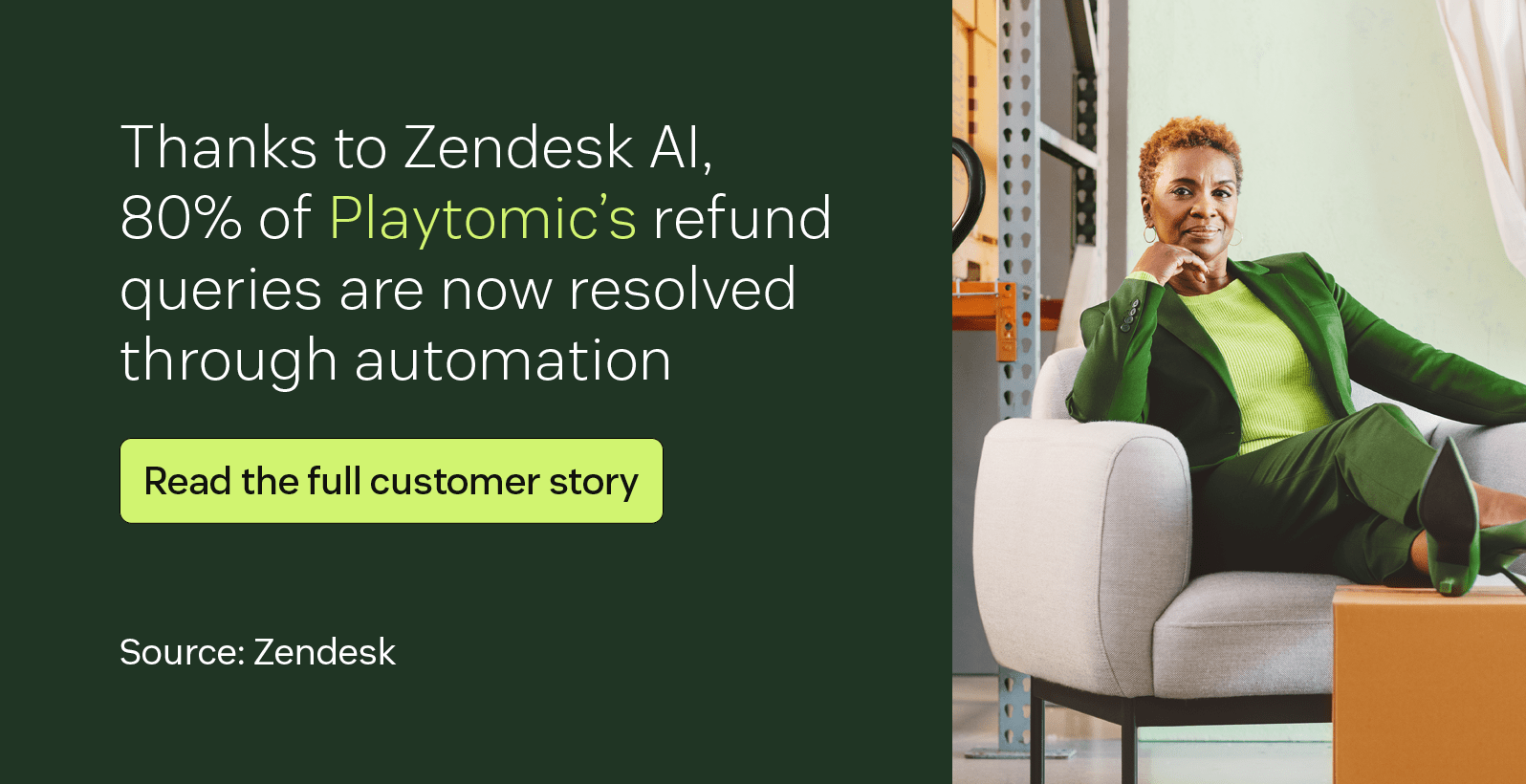
“Zendesk AI didn’t just transform our daily operations—it gave us the ability to scale with quality and efficiency. We’ve created a customer experience aligned with our global growth aspirations.”
— Giulio Castiglioni, director of customer care at Playtomic
Frequently asked questions
Try Zendesk today
Zendesk brings together everything you need for modern support, in one unified software. Unlike Ada, which offers a narrower solution focused on front-end automation, Zendesk supports the entire service experience from start to finish. If you're looking for AI that fits into your broader support strategy and adapts as you grow, Zendesk is the clear choice.
Zendesk vs. the rest: Compare the software
Take a look at these articles to see how Zendesk compares to other competitors.